Always know where you stand
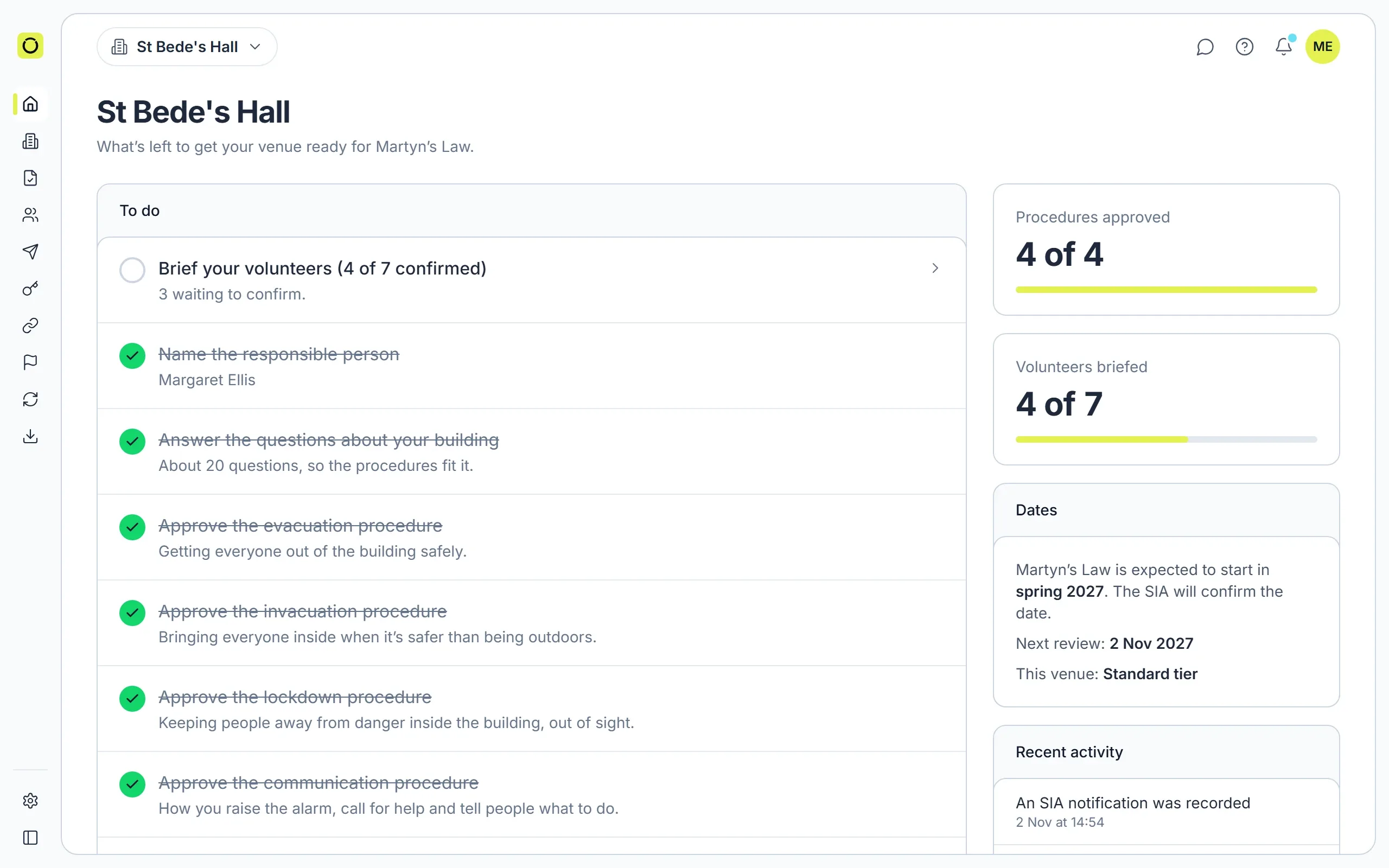
Your dashboard shows what's done, what's due next and who still needs to confirm their briefing, so staying ready is a quick check, not a project.
hailo turns what the law asks into four steps. Your plans are written and approved in about 30 minutes, then hailo keeps everything current as people and plans change.
An animation of the hailo dashboard for a made-up venue, St Bede's Hall: it's ready for Martyn's Law, with four procedures approved, everyone briefed, the next review in a year, a door poster to print, the evidence pack with the records the SIA could ask for, and a website badge.
The hours it takes the person getting the venue ready, step by step through the first year. Without hailo, the times are the Home Office's own estimates.
| Milestone | Without hailo | With hailo |
|---|---|---|
| Check it applies | 28 min so far | 2 min so far |
| Write your four plans | 9.5 hours so far | 32 min so far |
| Tell the SIA | 9.5 hours so far | 32 min so far |
| Brief 20 volunteers and staff | 14.5 hours so far | 37 min so far |
| Brief 10 hirers | 17 hours so far | 42 min so far |
| Put up your posters | 17 hours so far | 42 min so far |
| Brief 5 new people | 18 hours so far | 47 min so far |
Every year after, without hailo
About 4.5 hours to review and update your plans, in the Home Office's estimate, then briefing people again.
Every year after, with hailo
Reminders when people change and when the review is due, and a review that starts from your current plans.
The SIA says it will typically give at least 72 hours' notice before an inspection. The SIA's guidance
Without hailo
Find the latest version of each plan, work out who was briefed and when, and chase hirers for what they were told. All within 72 hours.
With hailo
It's already written down. Download your evidence pack: each plan with who approved it, and who was briefed and when, hirers included.
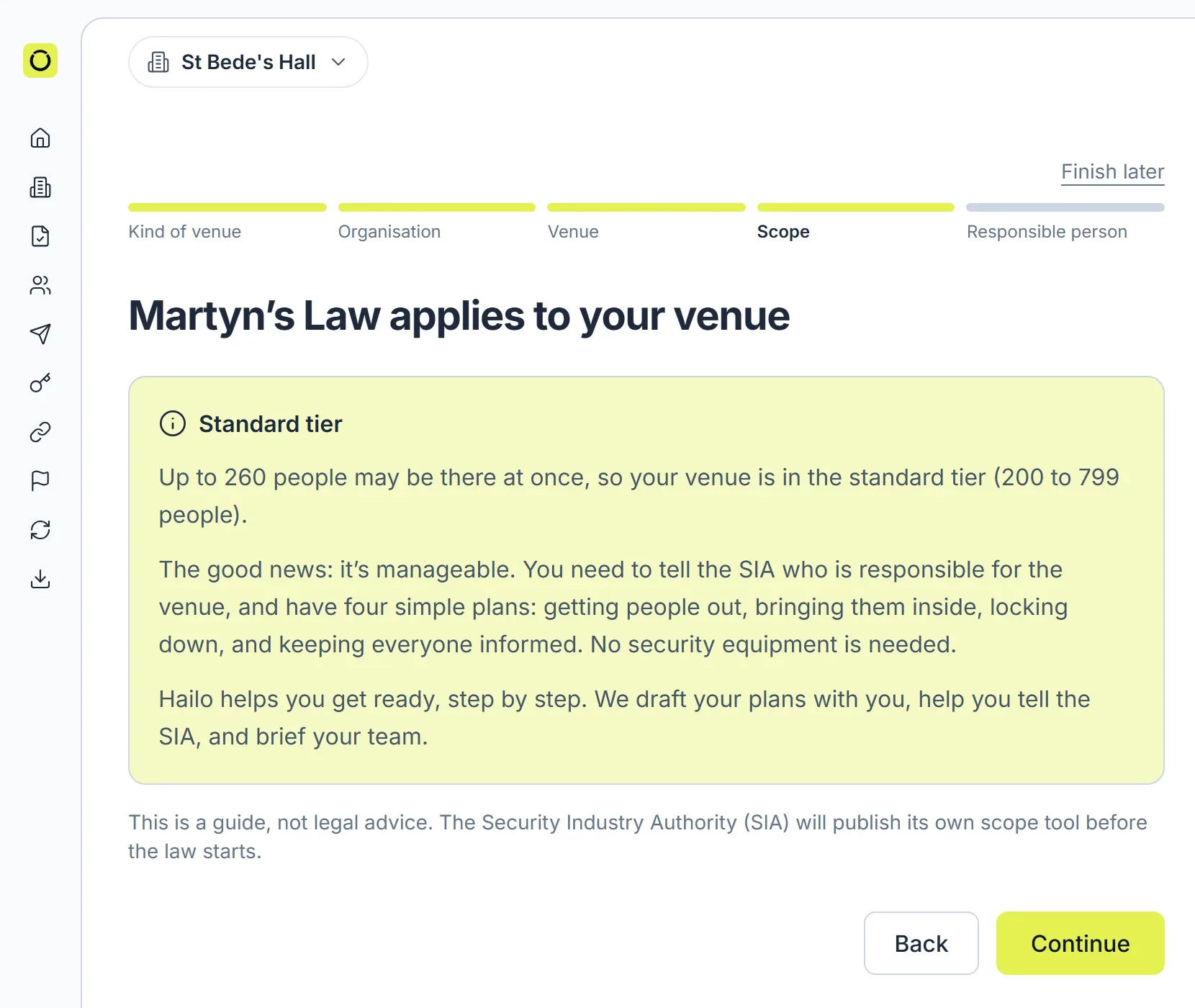
Four questions tell you whether Martyn's Law applies to your building and which tier you're in, with what that tier asks for in plain words.
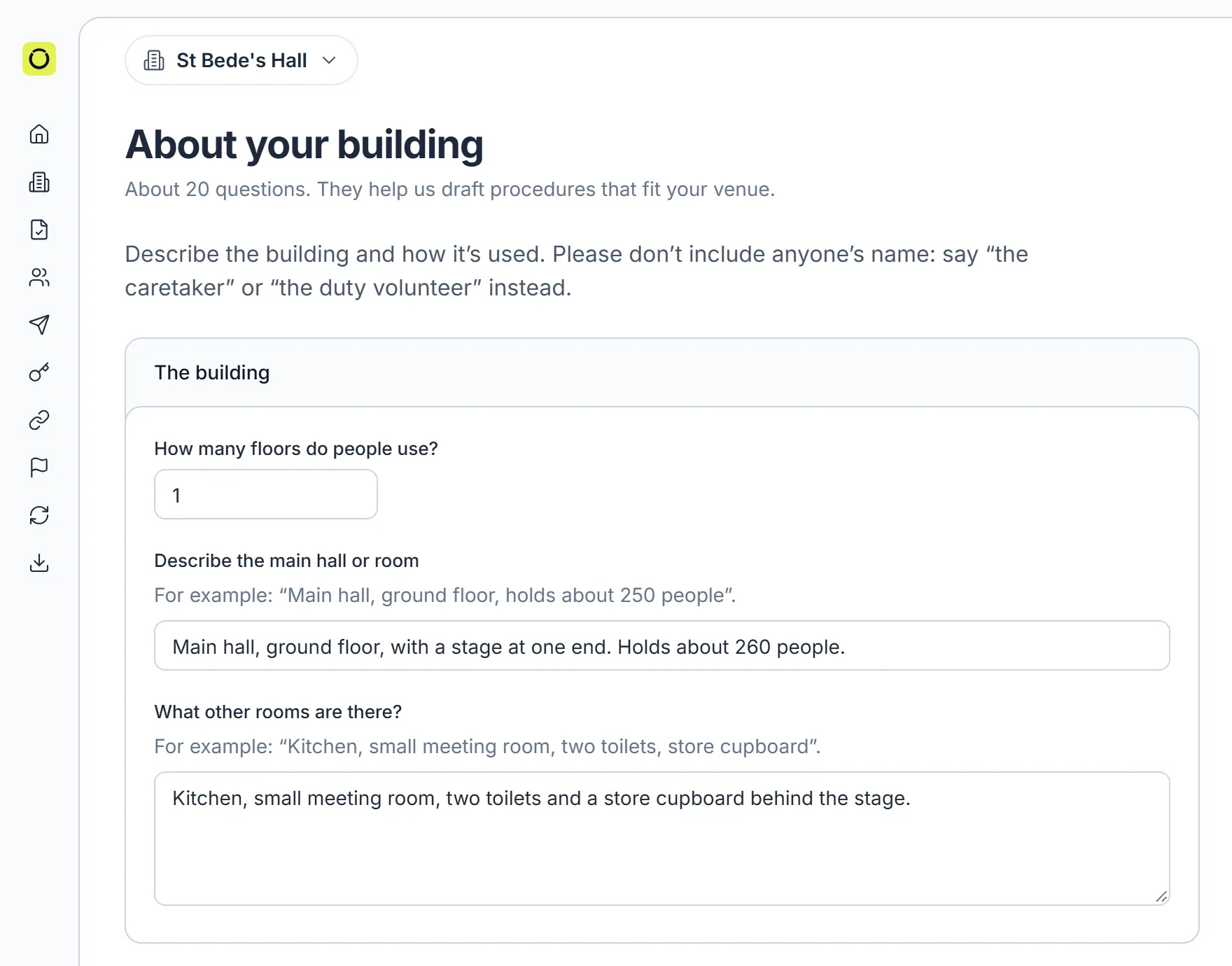
Your doors, rooms, where people could shelter and who holds the keys. Each question has an example, and you can save and come back.
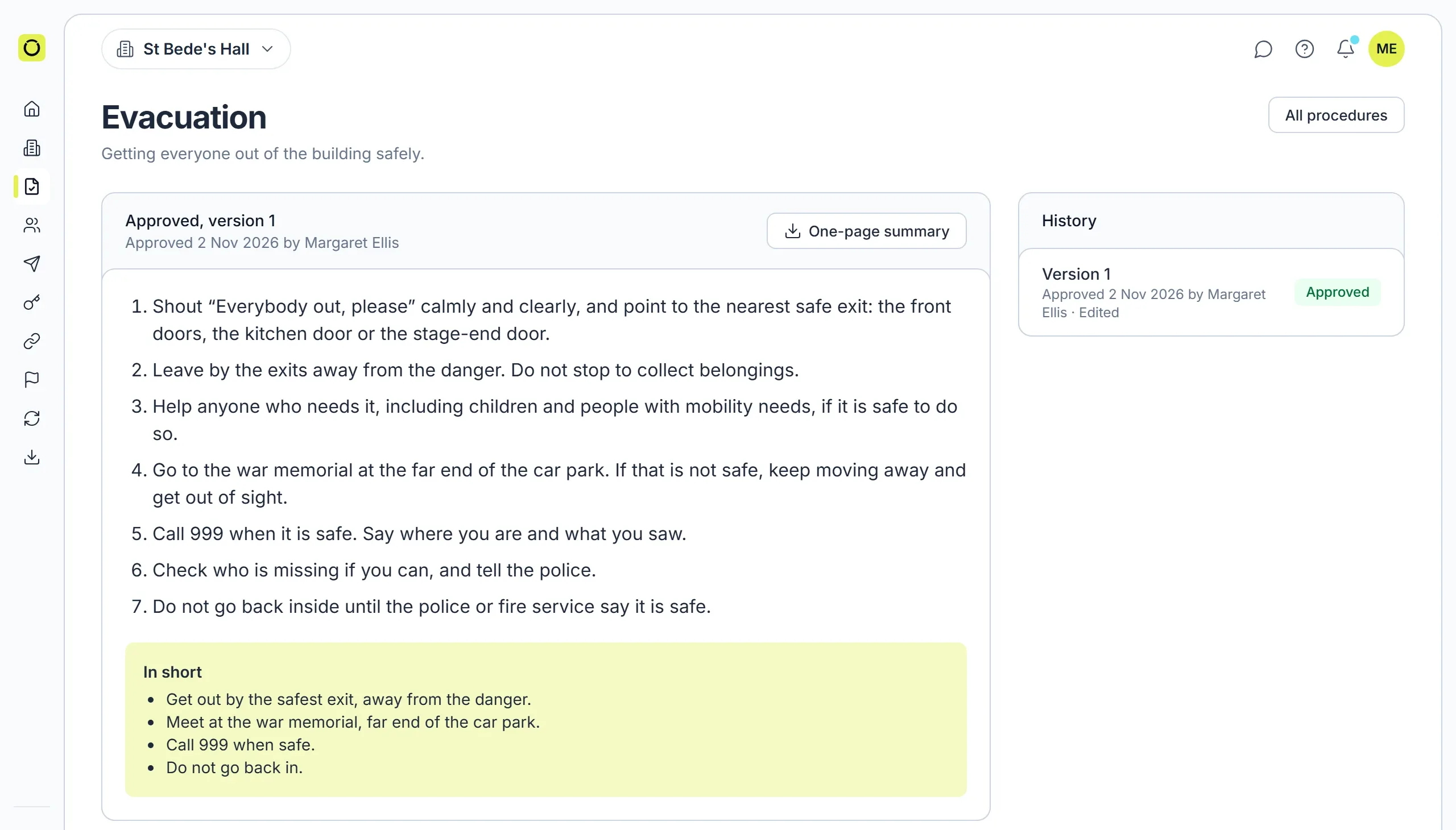
hailo drafts each plan from your answers, or starts you from a plain-English template. Edit any step, then approve it. Nothing reaches your volunteers until you do.
Volunteers, staff and keyholders each get their own link by email, or scan a QR code. They read a short briefing for your building and tap to confirm. You see who has and who hasn't.
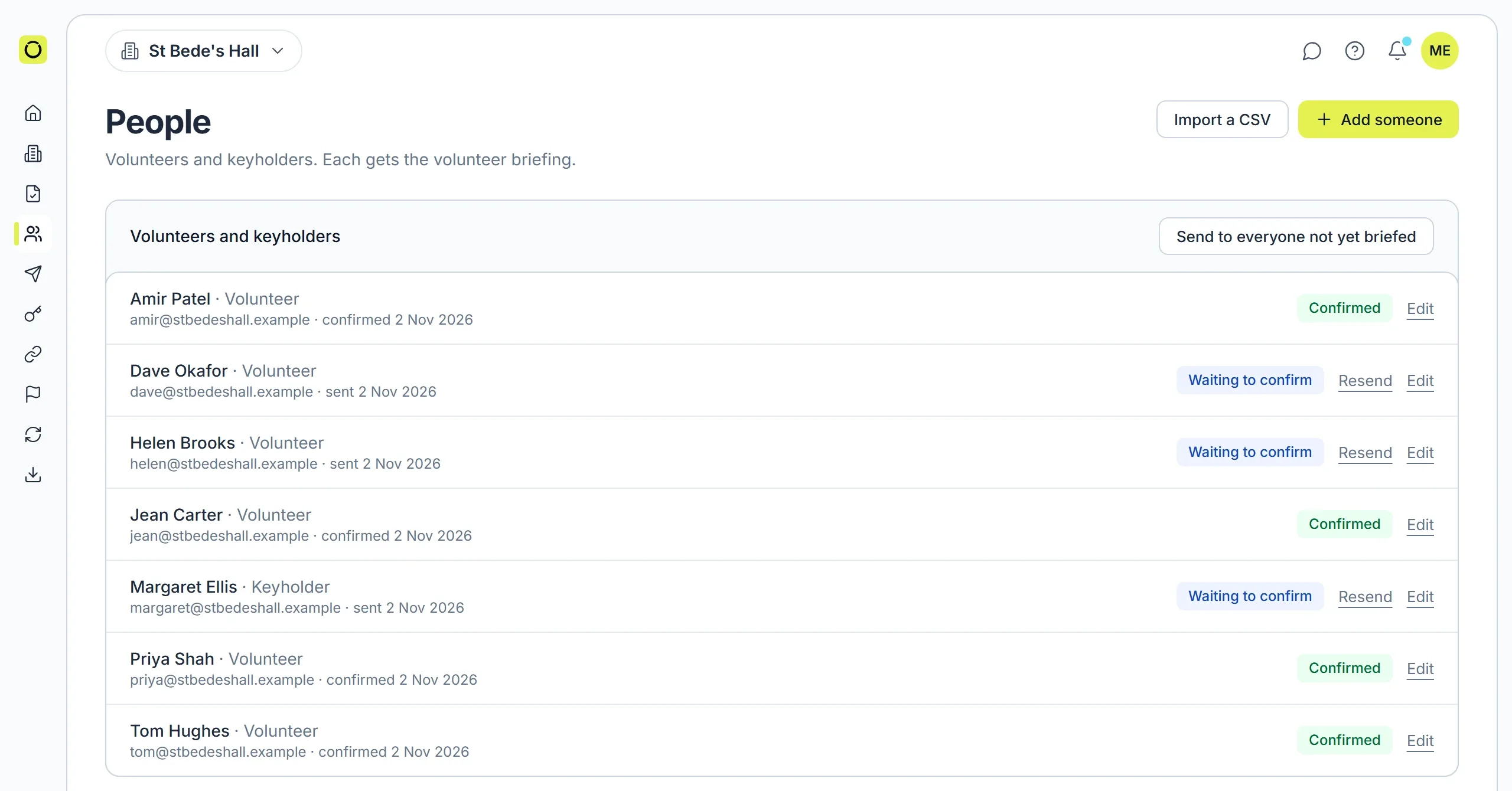
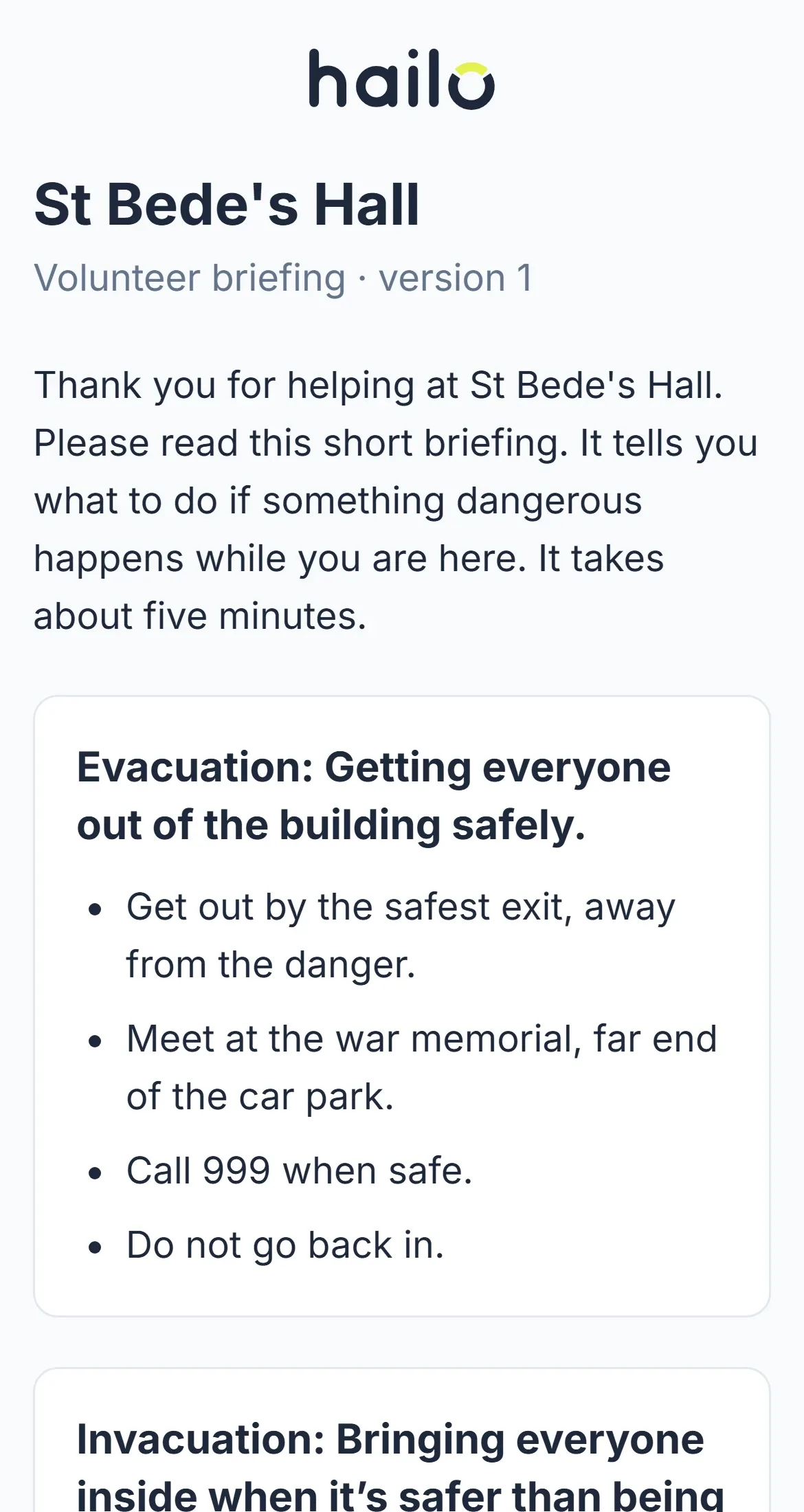
Your dashboard shows what's done, what's due next and who still needs to confirm their briefing, so staying ready is a quick check, not a project.
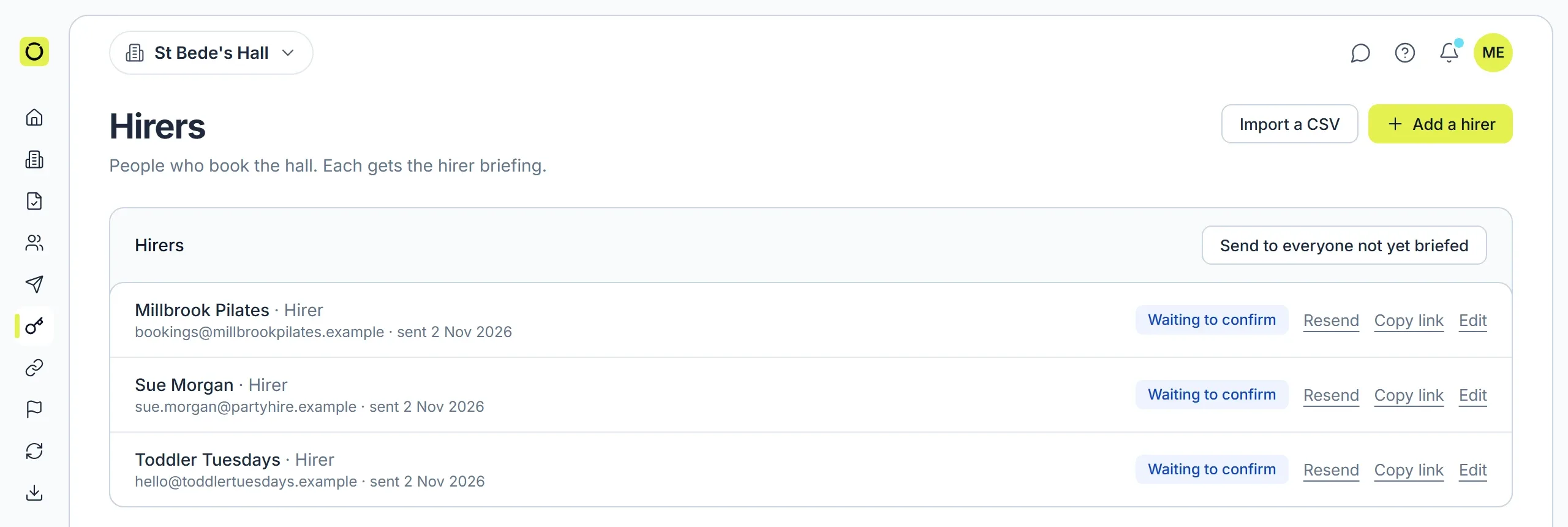
You stay the responsible person when the hall is hired, and the Home Office's guidance says to tell each hirer what's expected and be able to show you did. Every hirer gets a short briefing for their booking, by link or QR code, and you keep a dated record of who confirmed.
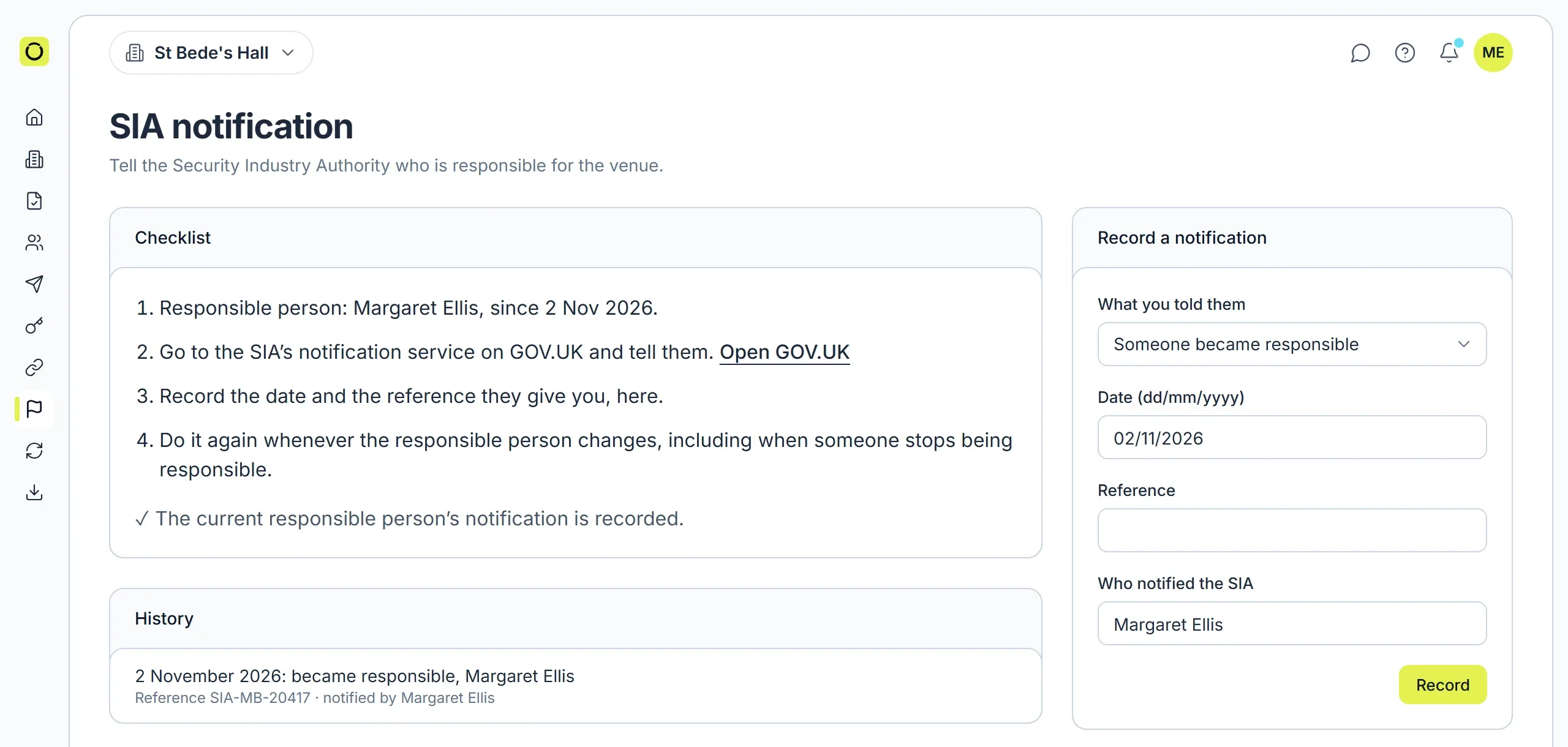
Record who the responsible person is, when you told the SIA and the reference they gave you. hailo keeps the history.
When a volunteer joins, a keyholder leaves, a plan changes or the yearly review is due, hailo tells you and re-briefs the people it affects.
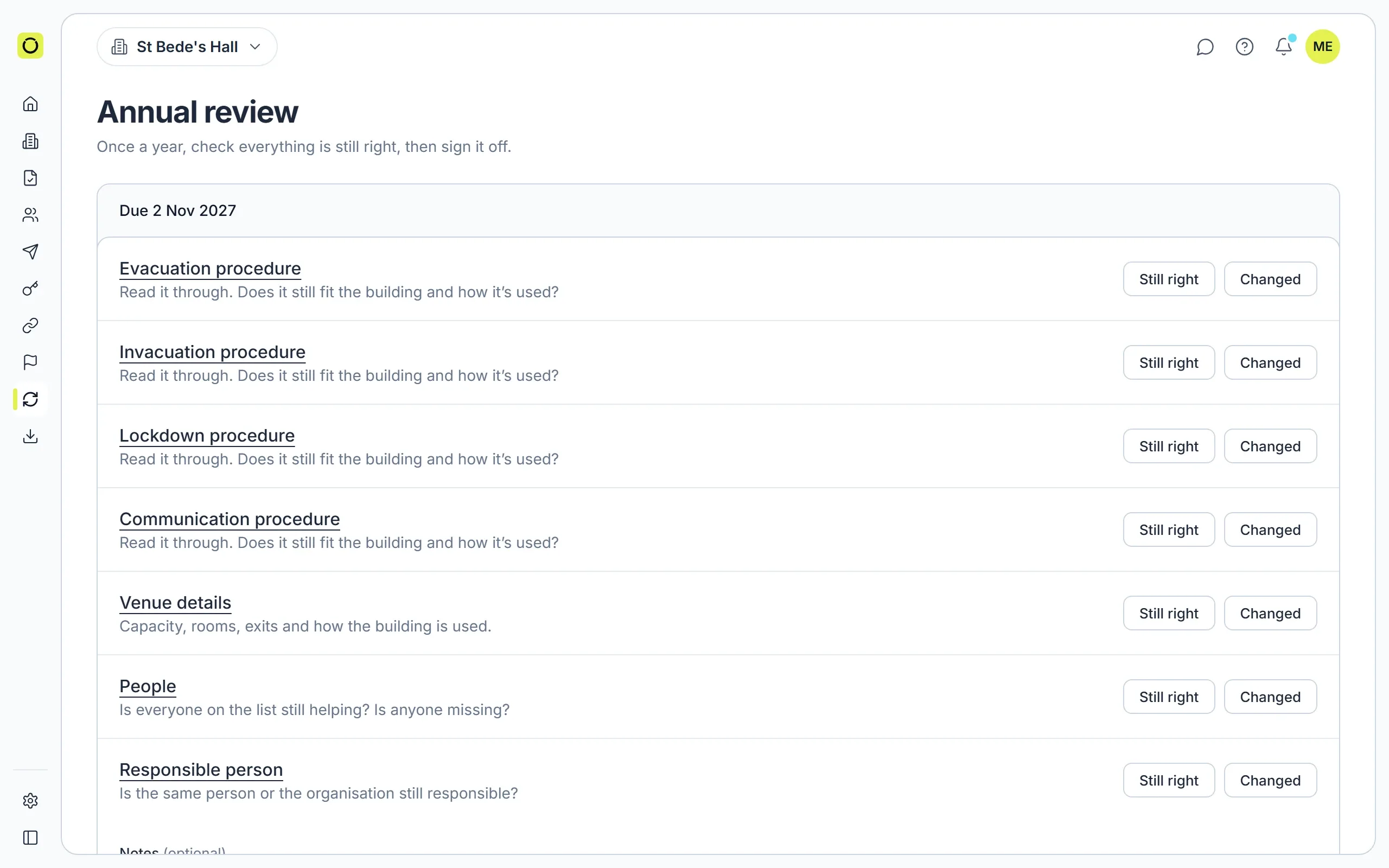
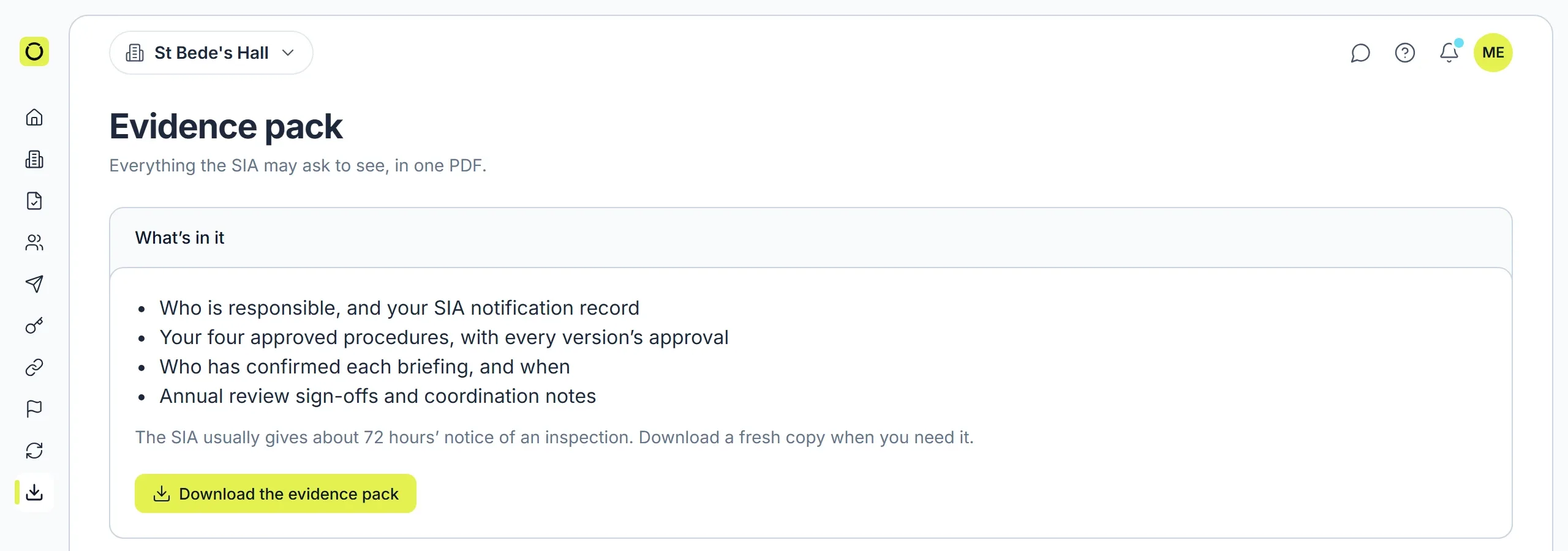
Your plans, who was briefed and when, your SIA record and your reviews, in one PDF, ready if the SIA asks.
Private where it matters. Lockdown details, locks and safe-room locations never appear on a public page. Door posters link to emergency cards with only the safe-to-share steps.
Evacuation
How you move people out of the building, or part of it, quickly and safely.
Invacuation
How you bring people inside, or to a safer room, when outside is the danger.
Lockdown
How you stop people getting in or out, for example by locking doors.
Communication
How you tell people what's happening and what to do: stay put, or move away.
No hardware, no guards, no course. It's about plans and people knowing them.Home Office factsheet
Written by hailo, approved by you. hailo drafts each plan from your answers and checks it before you see it: no promises of being "compliant", and nothing that asks volunteers to confront anyone. If a draft can't be written, you start from a plain template instead.